
Okay, so I’ve been thinking about this a lot, and I think I’ve figured out the actual game in AI economy.
Everyone’s obsessed with whether OpenAI or Anthropic has the better model.
Whether Llama can compete with GPT. Whether some new startup is going to disrupt everyone. It’s all bullshit. The question is simpler and way more boring: Who controls the electricity?
Like, NVIDIA didn’t win because they make better chips. They won because they basically own your access to the power grid. They just packaged it as hardware.
Think about it. When you’re buying a Blackwell GPU that pulls over a megawatt, NVIDIA isn’t selling you silicon. They’re selling you permission to plug into someone’s power infrastructure. That’s it. The chip is the least important part of the equation.
And once you see it that way, everything else becomes obvious.
Okay, Here’s What I Mean
So imagine you’re a company that needs to train an AI model at scale. You go to AWS. You rent some H100s. Feels great, right? You’ve got compute now.
Except you don’t. What you actually have is a tiny slice of AWS’s power budget, and you’re paying a premium for the privilege.
Here’s the reality: AWS buys power from utilities at around $40-50 per megawatt-hour. That’s their baseline cost. But they’re not selling it to you at that price. They’re selling it to you bundled into “GPU compute,” and they’re marking it up. A lot. Like, 150x markup a lot.
I’ll show you the math: if you’re paying $2.50 per hour for an H100, that’s about $1,825 per month. The actual power cost for running that GPU? Like $12 a month. Everything else is their margin.
So AWS is making money not because they’re great at cloud services. They’re making money because they’re arbitraging electricity. They buy it cheap, ration it to you, and sell it expensive.
You don’t realize you’re being rationed because it’s packaged as a cloud service.
The Constraint
This is the mental shift that matters. You think the constraint in AI is chip availability. It’s not. It’s never been about chips.
The constraint is whether you can actually plug into the power grid.
Think about it practically. Every token you generate is kilowatt-hours. Every time your model trains, it’s a physics problem before it’s a software problem. You can’t scale compute without scaling power, and you can’t scale power without either:
Owning a power contract with a utility or data center operator
Renting power from someone who does (and paying extra for it)
Hope
Most AI startups are in category 3. They don’t realize it yet.
The second thing people miss is cooling. When you draw a megawatt from GPUs, you need to get rid of a megawatt of heat. Not 90% of it. All of it. Physics doesn’t compromise.
Modern GPUs are so power-dense that air cooling doesn’t even work anymore. You need liquid cooling. Immersion cooling if you’re serious. And that hardware costs 30-50% as much as the compute hardware itself.
So a data center pulling 16 megawatts? You’re looking at $8-12 million just in cooling hardware. And it takes 12-18 months to build it out. If you didn’t order your cooling last year, you’re waiting. While your competitors train.
The Hierarchy
So there’s basically a hierarchy of who has leverage in AI, and it’s based entirely on who controls power:
At the top, you’ve got NVIDIA and the hyperscalers (AWS, Azure, Google Cloud). They control power contracts. They set prices. They can literally turn you off whenever they want.
Below them, you’ve got the labs that figured this out early. OpenAI, Anthropic, xAI probably. They negotiated directly with data center operators for their own power allocations. They’re not dependent on cloud providers anymore.
Then you’ve got wealthy startups that are willing to pay premium rates to hyperscalers for “guaranteed” access. They’re getting rationed capacity, but at least it’s predictable. They’re paying 2-3x more than the labs below them.
Below that, you’ve got most AI startups. They’re on spot market pricing. Cheap, unreliable. When hyperscaler demand spikes, their workloads get deprioritized.
At the bottom, you’ve got everyone else. Talking about AI. Not actually running it.
Your tier determines what you can actually build, not how smart you are or how good your idea is.
What This Means For Different People
If You’re Building a Frontier Model Lab
You need to understand something: your algorithm research matters, but it’s like optimizing the software on a power plant. It’s not where the game is.
Your actual priority right now should be: Do you have a power contract locked in?
Like, seriously. If you’re OpenAI or Anthropic, you probably spent the last 18 months quietly negotiating with data center operators for massive power allocations. This is not sexy. It doesn’t make for good tweets. But it’s why you can scale and your competitors can’t.
If you’re trying to build a frontier lab today and you don’t have power contracts sorted, your timeline just got cut in half.
Here’s what you actually need to do:
First, go sign a 50+ megawatt power contract. Not next year. Now. Negotiate with CoreWeave or Lambda or whoever the independent data center operators are that month. Get it locked in.
Second, negotiate fixed pricing. Don’t take variable rates. Power costs are going to increase, and every $5 per megawatt-hour bump eats into your margins. Lock in pricing for 3-5 years, even if it costs you 10-15% more upfront.
Third, design your training schedule around the power you actually have, not the power you wish you had. You have 50 megawatts? That’s your ceiling for the next 2 years. Optimize your training for efficiency within that constraint.
Fourth, when you want to scale to 100 megawatts, understand that you’re now negotiating with utilities, not data center operators. That takes 12-18 months and a different kind of negotiation. Plan accordingly.
And last, don’t put all your eggs in hyperscaler cloud. If 50% of your compute is on AWS, you’re hostage to their decisions. You want maybe 40% of your compute on direct power contracts, 30% on independent data centers, 30% on hyperscaler premium access. It’s more expensive, but it’s insurance against getting shut down.
If You Work at a Big Company
Okay, so you’re a Fortune 500 company and your CFO approved a $50 million AI spend with Microsoft. Congratulations. Your cloud provider just told you exactly how much power they’re willing to give you access to, and they’re rationing it.
When demand spikes (like, 3 months into your deployment), your workloads get deprioritized. They don’t tell you this directly. They tell you there’s “limited capacity” or “queue times.” What they mean is: we have a power budget, and we’re serving the customers who pay the most per megawatt first. You’re not them.
So here’s the thing: you should have no idea what your actual per-megawatt-hour cost is from your cloud provider, because they don’t tell you. They hide it in “compute hours.” But you can reverse-engineer it. If you’re paying $2-4 per hour for GPU time, you’re probably paying $80-120 per megawatt-hour. Your actual power cost is $40-50. They’re making 150-200% margin on electricity.
What you should do instead:
First, figure out which of your AI workloads actually matter. Is it training? Fine-tuning? Inference? Different workloads have different power profiles.
Second, for anything that’s a long-term production workload (like, training jobs over a month), go negotiate directly with a data center operator. CoreWeave, Lambda Labs, Crusoe. It’ll cost you 40-60% less than cloud.
Third, use hyperscaler cloud for experimentation and prototyping. You don’t care about efficiency there anyway. Use it for playing around.
Fourth, once you know what you’re doing, move production to direct contracts.
I know a Fortune 500 financial services company that was spending $200 million a year on AI workloads on Azure. We mapped their actual power consumption. They were paying $120 per megawatt-hour. We moved 60% of their production workloads to direct data center contracts at $65 per megawatt-hour. Saved them $45 million a year.
That’s not unusual. That’s the norm once people actually understand what they’re paying for.
If You’re Starting an AI Startup
Okay, 90% of AI startups don’t have a power strategy. They think they have one because they got AWS credits or spun up some compute on cloud, but they don’t.
Here’s what I mean. If you got $10 million in funding, you’re thinking about model architecture, product differentiation, go-to-market. You’re thinking about everything except power.
And that’s fine, because you shouldn’t be training models from scratch anyway.
Let me be honest: you cannot compete with OpenAI or Anthropic on a level playing field. They control power. You don’t. So don’t try.
Instead, pick one of these paths:
Path 1: Use someone else’s model. Build on top of Claude or GPT. Your job is to build the product and distribution around the API. You’re not constrained by power; you’re constrained by API costs. This works for almost everything: chatbots, Q&A systems, content generation, customer service.
Path 2: Use open-source models. Fine-tune Llama or Mistral on cloud GPUs. You’re not training these from scratch; you’re adapting them. Power constraints are way looser because you’re not doing foundational training. This works great for domain-specific stuff: legal AI, medical AI, industry-specific applications.
Path 3: Hybrid. Run inference on cloud (cheap, readily available), and do fine-tuning or small training runs on direct data center contracts (when you have specific, high-value data). You’re not training foundation models, you’re adapting existing ones to your data.
Path 4: Go big. Get $100+ million in funding and negotiate your own power contracts from day one. This is only viable if you have something truly differentiated (proprietary data, new architecture, etc.). Most startups don’t.
If you’re trying to train a better model on hyperscaler cloud, you’re already lost. You just don’t know it yet.
If You’re Thinking About AI Policy
Okay, so if you’re a government or a policymaker thinking about AI competitiveness, here’s the truth: talent doesn’t matter as much as you think. Funding matters less. The question is: Do you control your power grid in a way that lets AI labs scale?
If the answer is no, you’ve lost the AI race. You just don’t know it yet.
Look at what’s happening in the real world:
China figured this out. The government controls data center power allocation centrally. They’re not letting 50 startups fight over the same power. They consolidated it down to maybe 5-10 major labs with guaranteed power. Is it slower innovation? Yeah. But they move in lockstep, and they can scale hard when they decide to.
Texas is winning in the US. Why? Deregulated power market, cheap electricity, no environmental permitting nightmare. xAI is building out their data centers there. Oracle’s doing the same. Why? Because power is cheap and available. That’s the entire calculation.
California’s losing because power is expensive ($80-150 per megawatt-hour), permitting is complex, and environmental regulations add months to data center projects. So labs move out.
Iceland and Norway are becoming infrastructure hubs not because they’re geniuses, but because they have cheap geothermal and hydro power. But they’re not building labs there; they’re just renting power to others because they don’t have the capital for the labs themselves.
The Middle East (Saudi, UAE, Qatar) is bidding aggressively on AI infrastructure deals. They have capital, cheap power (oil-backed pricing), and space. Soon they’ll have the physical infrastructure, and they’ll attract or build labs around it.
The EU is basically locked out. Green energy mandates (good for climate, bad for economics), high baseline power costs, complex regulatory approval. European AI labs are operating at half the scale of US competitors, even with similar funding. It’s not a talent problem. It’s a power problem.
So if you’re a government thinking about this, here’s what you should actually do:
First, map your grid capacity. How many megawatts can you actually deliver sustained for AI? Most governments have no idea. This should be a critical infrastructure question, like ports or highways.
Second, create a strategic power allocation for AI. Don’t let individual data center operators negotiate independently. Create a pool: “We have X megawatts available.” Allocate it strategically to 3-5 major labs, not 50 startups.
Third, lock in cheap power for those labs. Negotiate 10-year fixed-rate contracts with utilities. Yes, this is industrial policy. Yes, it works.
Fourth, don’t try to “compete on AI research.” You can’t. Frontier models require NVIDIA chips (you don’t control those), massive capital (hard to compete), and elite talent (impossible). Instead, compete on being the best place to build AI infrastructure. If you’re the cheapest, most reliable place to run training, the labs will come. Eventually, the innovation will follow.
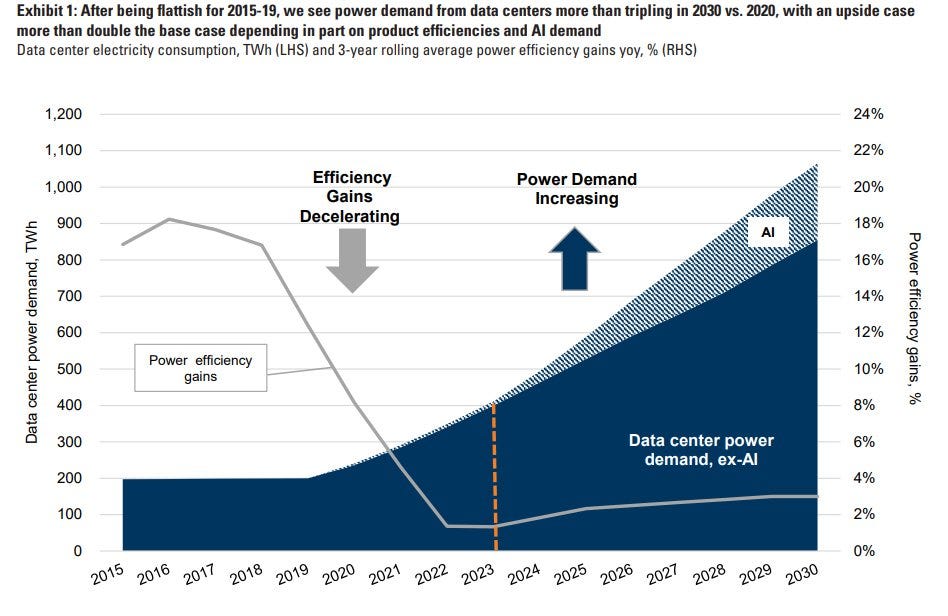
Fifth, start planning for power scarcity. AI is going to consume 2-3x more power by 2028. If your grid is already stressed, your labs are going to move. Plan now: new power plants, nuclear energy, renewables. If you don’t, you’re out.
Okay, So What Does This Actually Mean?
Here’s the thing that blows my mind: NVIDIA’s real competitive advantage isn’t their chip design.
It’s their relationships. With utilities. With data center operators. They’ve been building those relationships for decades. They know the power infrastructure inside out.
Intel tried to compete on chips. They lost because they had zero power relationships.
AMD is trying to compete now. They’ll lose for the same reason, unless they build those relationships from scratch (spoiler: they’re trying, but they’re years behind).
The real competitor NVIDIA should worry about isn’t another chip company. It’s a power company that decides to design its own chips. Or a data center operator that says, “Actually, we’ll just build our own hardware and keep the margin.”
The Uncomfortable Stuff
Here’s the stuff that doesn’t sound good when you say it out loud:
Open-source models aren’t actually open. Llama’s “open” because Meta subsidizes the power cost. If Meta stopped paying for training, Llama would stop existing. Open source is just “funded by whoever controls the power.” The entire model of distributed, decentralized AI development? That only works if someone’s paying the power bills. Usually it’s a big company.
Geographic arbitrage is dead. For a decade, the AI advantage went to whoever was in Silicon Valley or could rent from AWS cheaply. That’s over. The new advantage goes to whoever lives somewhere with cheap power and access to a deregulated grid. Texas beats California. Iceland beats Germany. Saudi Arabia beats everyone.
Scaling laws are hitting a wall. All the models that predict how much better AI will get if we just train on more data assume unlimited compute at fixed cost. That’s a lie. Compute cost is increasing because power constraints are binding. If you want to train a 100 trillion parameter model, you don’t have a hardware problem. You have a power plant problem. And there’s no such thing as a “software solution” to needing 10 gigawatts of power. You just... need power infrastructure. That takes years to build.
Most AI strategy is performance theater. People are making these grand plans about how they’ll train models and compete with OpenAI. But they haven’t secured power. They don’t understand cooling. They don’t have a grid relationship. They have a PowerPoint. They don’t have a strategy.
So What Actually Wins?
The companies and labs that win in the next 5 years will be the ones that:
Understood power as the constraint (not algorithm optimization)
Locked in power contracts early (when hyperscalers were overconfident)
Built products around the power they actually have (not the power they wish they had)
Optimized for power efficiency at every layer (inference routing, batching, caching, everything)
Used power scarcity as a moat (raising the barrier to entry)
Everything else is just noise.
Better algorithms matter, but only if you have power to run them. Better products matter, only if you can serve them at scale. Better talent matters, only if they have compute to work with.
Power is the binding constraint. Everything else is an optimization problem against that constraint.
The Talk
Here’s my honest take: AI dominance in the next decade will be determined by the same factors that determined dominance in electrical infrastructure in the 1900s.
Not brilliance. Not innovation. Who controls access to cheap, reliable electricity.
That’s it.
The labs that realized this early are winning right now. The ones that didn’t are hoping. The ones that ignore it are dead.
And if your AI strategy doesn’t start with “How do we secure power?”, then it’s not a strategy.
It’s a fantasy.
Numbers, If You Care
Just so you have real reference points:
Power costs by region (2025):
Texas: $35-45 per megawatt-hour
Iceland: $30-40 (if you can negotiate)
Middle East: $20-35 (with government backing)
California: $80-120 (and going up)
Europe: $90-150 (and heavily regulated)
Building a data center (per megawatt):
Land and building: $500,000-$1 million
Cooling: $300,000-$500,000
Electrical infrastructure: $200,000-$400,000
Total: around $1-1.5 million per megawatt
Monthly operating costs (per megawatt):
Power alone: $36,000
Cooling (20% of power): $7,200
Staff and maintenance: $15,000
Total: around $60,000 per megawatt per month
One megawatt = roughly 3,000 H100 GPUs. So your power cost alone is $12 per GPU per month.
When cloud providers charge you $2.50 per hour, that’s $1,825 per month. The power cost is $12. Everything else is their arbitrage.
Last Thing
You don’t build AI dominance.
You build dominance in power.
Everything else is just how you package it.
That’s the game. That’s what everyone’s actually playing, whether they realize it or not.