
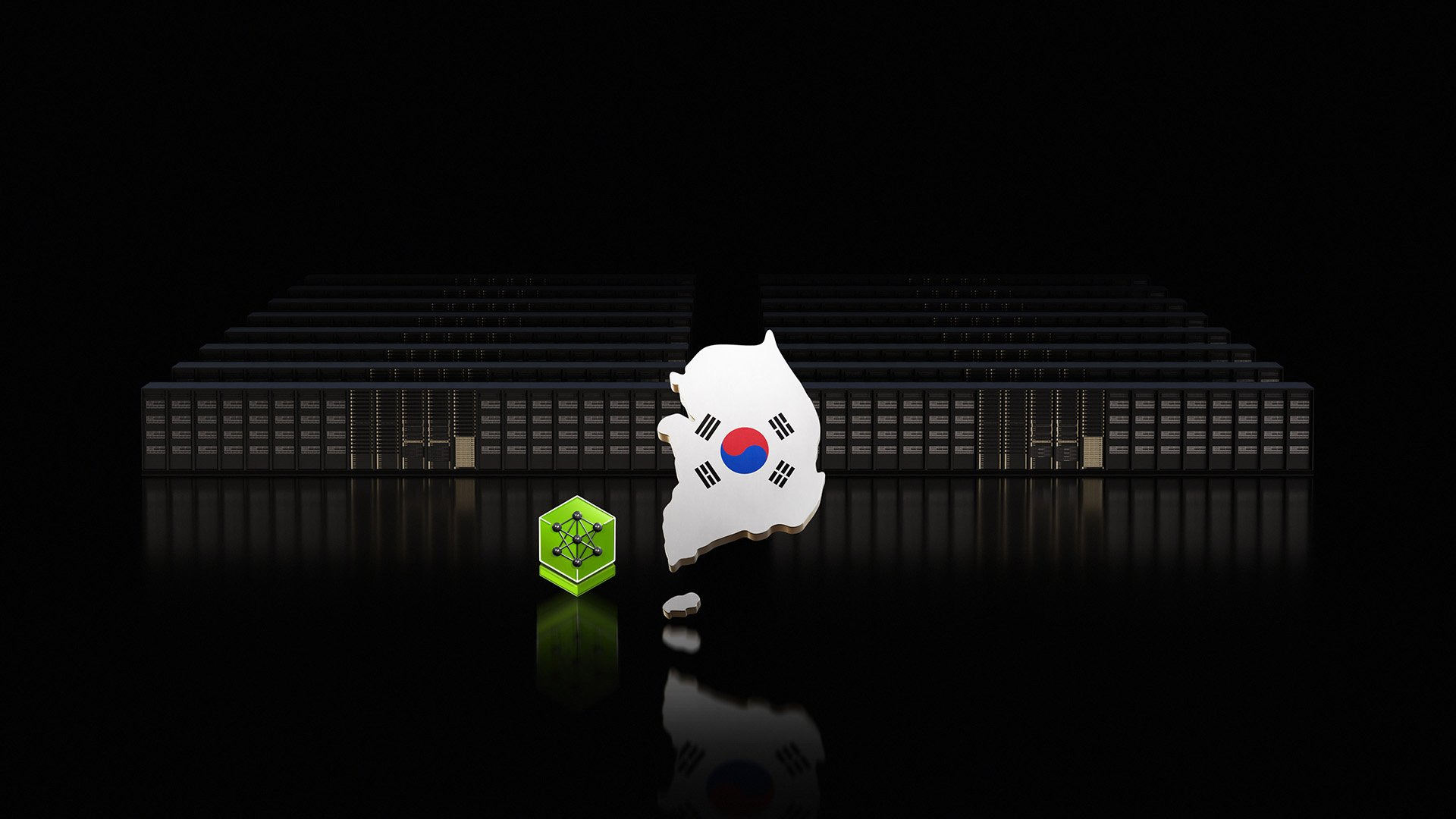
Jensen Huang flew to Seoul to lock down supply chain.
That single sentence is the entire story. Everything else, the photo ops, the baseball pitch at Jamsil Stadium, the Korean BBQ, the stadium fanfare, is theatre surrounding a deeply calculated infrastructure operation. In the span of four days, NVIDIA signed partnerships with Naver, SK Group, SK Hynix, SK Telecom, and Doosan. Five major Korean conglomerates. One visit. A gigawatt-scale AI factory roadmap announced before the week was out.
The thesis here is simple and uncomfortable: the countries that will matter in the AI era are not necessarily the ones with the best models or the most PhDs. They are the ones that locked in the physical layer.. memory, compute, power, and industrial robotics, before everyone else figured out that those were the chokepoints. South Korea just made a very loud statement that it understands this.
What Actually Got Signed
Strip away the press releases and four concrete things happened in Seoul this week.
SK Hynix signed a multiyear technology partnership with NVIDIA to co-develop next-generation high-bandwidth memory for AI data centers which means NVIDIA is pulling Korea’s most important memory manufacturer into the architecture planning of future GPU platforms. SK Hynix doesn’t just supply HBM, it now co-designs the memory envelope that determines what NVIDIA’s next systems can do.
SK Group is building an AI factory featuring more than 50,000 NVIDIA GPUs. SK Telecom is building a gigawatt-scale AI Cloud using the NVIDIA DSX platform, with the first data center expected online in 2027. The stated ambition is sovereign AI infrastructure, agentic services, physical AI, industrial compute, built on Korean soil but integrated into NVIDIA’s global stack.
Naver is expanding its Gak Sejong data center starting at 55 megawatts, scaling toward gigawatt capacity, using NVIDIA’s DSX platform, and joining NVIDIA’s Nemotron Coalition to advance its HyperCLOVA X language model. Naver framed the deal explicitly as a value chain partnership, shared risk, shared profit.. not a vendor relationship.
Doosan, which manufactures components for NVIDIA’s GPUs and is building intelligent industrial robots, signed agreements to use NVIDIA’s physical AI technology to power its robotics division while NVIDIA integrates Doosan’s energy solutions into its data center platforms. The industrial conglomerate is now both a supplier to NVIDIA and a customer of NVIDIA’s AI stack.
Each of these is structurally different. Together, they represent a country embedding itself into NVIDIA’s production and deployment architecture from multiple angles simultaneously, memory supply, compute manufacturing, infrastructure deployment, model development, and robotics. That is not a partnership play. That is a sovereignty play.
The Binding Constraint
AI inference is not limited by how smart your model is. It is limited by how fast you can move weights between memory and compute. High-bandwidth memory is the physical bottleneck that determines how many tokens you can process per second, at what cost, at what scale. SK Hynix produces HBM3E, currently the most advanced high-bandwidth memory in production and supplies a dominant share of what goes into NVIDIA’s H100 and GB200 systems.
Jensen Huang said it plainly in Seoul: “Advanced memory is at the core of their performance.” That line is worth sitting with. The CEO of the company that controls GPU supply just told you that the constraint on his own products is a Korean company’s output. He then signed a multiyear joint development agreement to make sure that constraint doesn’t become a crisis.
This is what supply chain sovereignty looks like from the inside. NVIDIA is not acquiring SK Hynix. It doesn’t need to. It is integrating them so deeply into the architectural roadmap that the relationship becomes bilateral dependency. Korea needs NVIDIA’s platform to matter globally. NVIDIA needs Korea’s memory to keep scaling. Neither can fire the other without enormous pain. That is the deal.
The second binding constraint is power. The Naver gigawatt-scale roadmap is explicitly conditional on power availability. Gigawatt-scale AI infrastructure requires gigawatt-scale electricity. South Korea’s grid capacity, industrial land availability, and regulatory environment will determine whether that ambition lands or stalls. The same constraint that is throttling hyperscaler buildout in Virginia, Texas, and Ireland is now South Korea’s problem too. Doosan Enerbility, a nuclear, gas turbine, and energy infrastructure company being pulled into the NVIDIA partnership is not a coincidence. It is the energy answer being pre-wired into the deal architecture.
Korea’s Unfair Advantages
The lazy analysis of this story is that NVIDIA is expanding into a new market. That misses what South Korea actually brings.
Korea has the most sophisticated semiconductor manufacturing infrastructure outside of Taiwan. TSMC gets the headlines, but the full AI compute stack requires memory as much as it requires logic chips. Samsung and SK Hynix together dominate global HBM production. Without Korean memory, there are no NVIDIA training clusters at the scale the AI industry currently operates. This is not a new development but the NVIDIA-Korea partnership formalises the dependency in a way that has strategic implications for every other country watching.
Korea also has an industrial robotics sector that most Western observers systematically underestimate. Doosan, Hyundai, Samsung, these are not hobbyist robot companies. They are serious manufacturers with deep experience in industrial automation, shipbuilding, semiconductor fab tooling, and precision manufacturing. NVIDIA’s physical AI platform, the software and compute stack that makes intelligent, autonomous robots possible needs deployment partners with real industrial scale. Korea has that.
The gaming culture angle in the original NVIDIA framing is not trivial, though it is often misread as a consumer story. Korea’s gaming infrastructure built one of the world’s most developed high-performance computing cultures. PC bang networks, competitive esports infrastructure, and the engineering talent pipelines that grew out of them created a technical workforce that is unusually comfortable with GPU-heavy computing environments. When NVIDIA sells data center infrastructure to Korean enterprises, it is selling into a market that already understands the stack better than most.
The Geopolitical Ledger
What does it mean for the global AI power balance that South Korea just embedded itself this deeply into NVIDIA’s ecosystem?
Taiwan already holds the logic chip chokepoint through TSMC. South Korea now holds the memory chokepoint through SK Hynix. Both countries sit in the direct shadow of Chinese military ambition. The United States has staked its AI infrastructure buildout on supply chains that run through two of the most geopolitically exposed nations on the planet.
NVIDIA’s Seoul visit is partly about securing supply. But it is also about creating mutual dependencies that function as deterrence. The more deeply SK Hynix is integrated into NVIDIA’s roadmap, the more economically devastating any disruption to that relationship becomes, for both sides, and for the global AI industry. Economic interdependence has always been one mechanism by which great powers attempt to manage conflict risk. NVIDIA is, consciously or not, practicing a form of private-sector diplomatic architecture.
For other major economies watching, the lesson is direct: if you are not already embedded in NVIDIA’s supply and deployment architecture, the cost of entry is rising every quarter. Japan signed its deals earlier. Taiwan is structurally embedded. India is pursuing its own GPU buildout. The countries that waited, that thought model capability or regulatory frameworks were the primary competition axis … are discovering that infrastructure access was the game the whole time.
China is watching this with specific urgency. Every SK Hynix HBM chip that goes into an NVIDIA AI factory is a chip that does not go to Chinese AI companies operating under US export restrictions. The Korea deals tighten that constraint further. NVIDIA is building infrastructure in an allied nation using technology that is simultaneously being denied to China. The geopolitical logic and the commercial logic are the same transaction.
What This Does to the Startup Ecosystem
The SK Telecom gigawatt AI cloud and the Naver Nemotron Coalition membership together point at a question that matters for every AI founder outside the United States and China: where do you go to build sovereign AI infrastructure without reinventing the stack from scratch?
The answer NVIDIA is assembling in Korea, DSX platform, Nemotron Coalition, HyperCLOVA X integration, 50,000 GPU factory is a template. It is a franchise model for national AI infrastructure. You bring the regulatory environment, the industrial anchor tenants, the energy capacity, and the national ambition. NVIDIA brings the platform, the GPU supply, the software stack, and the global ecosystem connections. The country gets to call it sovereign AI. NVIDIA gets another locked-in compute market.
For local Korean startups, this creates a paradox. Access to world-class GPU infrastructure on Korean soil improves dramatically. But the platform those startups will build on is NVIDIA’s DSX, their models will sit in the Nemotron Coalition, and their inference will run on hardware architectures co-developed with SK Hynix under NVIDIA’s roadmap governance. Sovereignty over the infrastructure layer coexists with deep dependency on the platform layer. That is a better deal than most countries get. Whether it is true sovereignty is a different question.
The founders who win in this environment are the ones who understand that the platform layer is NVIDIA’s and build application and distribution businesses that exploit the infrastructure without competing with it. The ones who lose are the ones who mistake access to compute for independence from the platform stack.
Second-Order Consequences
Global supply chains are about to experience a reorientation that the NVIDIA-Korea deals accelerate.
Korean chaebols, Samsung, SK, Hyundai, LG, Doosan are now more deeply integrated into AI infrastructure buildout than almost any equivalent industrial conglomerates in the West. Their supply chains, their manufacturing facilities, their component networks are going to orient further toward AI factory requirements. This has downstream effects on the Korean industrial labour market, on Korean energy demand, on Korean land use for data center development, and on the investment patterns of Korean pension funds and sovereign capital.
The 55-megawatt Naver data center expansion is a starting point. Gigawatt-scale ambition across Naver, SK Telecom, and potentially others represents a power demand that will reshape Korean energy infrastructure investment over the next decade. Doosan Enerbility’s involvement in the NVIDIA partnership is the tell: nuclear, gas turbine, and grid infrastructure are going to be pulled into AI factory economics in Korea the same way they are in the United States. Energy is the real constraint, and the companies that solve it including industrial conglomerates most equity investors do not currently associate with AI will capture significant rent.
For global supply chains, Korea’s deeper integration into AI infrastructure means more strategic concentration, not less. The world’s AI compute stack now has three geographic chokepoints with military significance: Taiwan (logic chips), South Korea (memory), and the United States (GPU design and software stack). Adding Korea to that list is a feature for NVIDIA’s supply chain stability. It is a risk factor for everyone whose AI buildout depends on supply chains running through the Korean Peninsula remaining undisrupted.
The Full-Stack Capitalist Take
The NVIDIA-Korea partnership cluster is one of the most clearly legible examples of the binding constraint thesis playing out in real time. The AI race is not being won in model benchmarks or research papers. It is being won in HBM production agreements, gigawatt-scale data center roadmaps, multiyear memory co-development partnerships, and industrial robotics integration deals. Korea just locked in on the right side of all four of those vectors simultaneously.
What should bother everyone watching is how few countries have the industrial base to replicate this. You cannot build sovereign AI infrastructure without memory manufacturing, without industrial energy capacity, without a skilled technical workforce, and without enough economic mass to be worth NVIDIA’s time. That list is short. Korea was on it. Most countries are not.
The countries that are not on that list have one remaining move: build application layer businesses that do not require owning the physical layer. That is a viable strategy. But it is a very different strategy than what Korea is doing, and it produces a very different economic outcome. Application layer rent flows to the platform. Infrastructure layer rent compounds.
South Korea just chose infrastructure. It is not a coincidence that NVIDIA’s CEO took a four-day trip to make sure they stayed chosen.
Takeaways by Audience
For founders: the platform layer is locked. NVIDIA’s DSX and the Nemotron Coalition are becoming the operating system for national AI infrastructure worldwide. Build applications and distribution businesses that exploit this platform rather than compete with it. The founders who treat GPU access as a commodity and focus on the layer above proprietary data, distribution moats, workflow integration will capture more durable value than the ones trying to build infrastructure from scratch.
For operators: the enterprise AI implementation question is no longer “which model” it is “which compute stack and which supply chain.” Korean enterprises building on SK Telecom’s gigawatt AI cloud and Naver’s HyperCLOVA X infrastructure have different cost structures, latency profiles, and data sovereignty constraints than US-based enterprises building on AWS and Azure. Know your stack. Know its dependencies. Know whose roadmap you are riding.
For investors: the second-order plays here are in Korean energy infrastructure, industrial robotics, and the chaebol supply chain networks that are being pulled into AI factory economics. Doosan Enerbility, Korea Electric Power, and the Korean industrial real estate market are all downstream beneficiaries of a gigawatt-scale AI factory buildout that is now on a committed roadmap. HBM memory and its investment implications are already priced. The energy and industrial infrastructure is not.
For governments: the NVIDIA franchise model for national AI infrastructure is now a template that other countries will attempt to replicate. The price of admission is industrial capacity, energy infrastructure, and regulatory alignment with US technology export frameworks. Countries that cannot meet those requirements will build on Chinese infrastructure or go without. There is no neutral infrastructure option at gigawatt scale. The Seoul deals make that reality harder to ignore.