
Let me tell you what actually happened last week, because the headline undersells it.
GridMarket, a company most people outside the energy industry have never heard of, signed a deal with a microreactor startup called Deployable Energy.
The press release says $22.5 billion. Read the actual filing and the real number is $145 billion in lifetime contract value over 40 years, built on more than 3 gigawatts of nuclear capacity that GridMarket’s data center and hyperscaler customers are expected to buy through 2035.
Deployable’s reactor, called the Unity Nuclear Battery, hit criticality the week before the announcement, which is the nuclear industry’s version of a startup shipping its first product to a paying customer. The plan is 500 megawatts of new capacity every year starting in 2030, running through 2035.
That is not a partnership between two energy companies. That is a bet that nuclear power is about to become a commodity product that gets sold the way compute gets sold, and that whoever controls the sales funnel for that product owns one of the most valuable positions in the entire AI economy.
I want to walk you through why this deal matters more than it looks like it does, because underneath the press release language is the clearest example yet of the binding constraint thesis playing out in real time. The AI race stopped being about who has the best model a while ago. It is now about who can get electrons to a building fast enough, reliably enough, and cheaply enough to keep GPUs running.
GridMarket and Deployable just showed you what the next five years of that fight looks like.
Why nuclear, and why now
Here is the mental model you need first. Every hyperscaler procurement strategy used to run on a simple assumption: buy power from the grid, sign a power purchase agreement with a solar or wind developer if you want to look green, and let the utility handle the hard part.
That assumption is dead. Data center power demand is growing faster than transmission lines can be built, faster than gas turbines can be manufactured, and faster than utilities can get interconnection studies approved.
Microsoft, Google, Amazon and Meta have all responded by going straight to the source and signing nuclear deals that would have looked insane five years ago. Microsoft locked in an 835 megawatt, $16B dollar, twenty year deal to restart Three Mile Island Unit 1.
Google committed to 500 megawatts from Kairos Power’s molten salt reactors. Amazon put $700M dollars into X-energy for up to twelve reactors. Meta has stacked commitments across TerraPower, Oklo, Vistra and Constellation that could add up to 6.5 gigawatts.
That is the first mental model: energy procurement for hyperscalers has stopped being a cost center decision and become a strategic infrastructure decision, on par with choosing which cloud region to build in or which chip vendor to lock into a multi-year supply agreement.
Nobody signs a 40 year, $145 billion dollar contract to save money in the next fiscal quarter. They sign it because they have done the math on AI compute demand through the 2030s and concluded that firm, dispatchable, carbon-free power is going to be scarcer than the chips themselves.
This directly answers the first deep question worth asking about this deal: what happens economically when data centers stop being fossil fuel customers and become nuclear customers. The answer is that the cost structure of AI compute starts to look less like a technology cost curve and more like a utility cost curve, locked in decades in advance, insulated from natural gas price swings, and backed by contracts that behave more like infrastructure bonds than software subscriptions.
The matchmaker gets paid more than the reactor builder
Now here is the part that should make you sit up if you actually care about where value gets captured in this stack.
GridMarket does not build reactors. GridMarket does not own uranium. GridMarket is, functionally, a lead generation and deal facilitation platform. It has spent a decade building relationships with Fortune 500 to Fortune 2000 industrial customers, data centers, and hyperscalers who need energy solutions, and it uses that funnel to route demand toward supply.
In this deal, GridMarket is the party that gets Deployable Energy in front of buyers who are already qualified, already have deployment-ready sites, and are already desperate for power. Deployable gets distribution. GridMarket gets a cut of a one hundred and forty five billion dollar pipeline without ever pouring concrete for a reactor.
This is the second mental model, and it is the one that should sound familiar if you have read anything I have written about AI infrastructure before: the party that controls demand aggregation captures disproportionate value relative to the party that owns the physical asset.
We have seen this exact pattern with NVIDIA’s software stack sitting on top of commodity silicon, with cloud providers sitting on top of commodity chips, and now with GridMarket sitting on top of commodity nuclear megawatts. Owning a chokepoint in the deal flow is worth more than owning the thing being sold through that chokepoint, as long as the thing being sold is scarce enough that buyers will pay for faster, more certain access to it.
That answers the second deep question, the one about competitive dynamics among energy providers. GridMarket is not competing with Kairos Power or Oklo or TerraPower. It is positioning itself as the layer above all of them, a customer acquisition and deployment facilitation platform that could, in theory, plug in a different reactor vendor tomorrow if Deployable stumbles. That is a much better competitive position than being a single-technology nuclear developer racing against five other single-technology nuclear developers for the same handful of hyperscaler contracts.
A crowded reactor race with very different bets
Speaking of that race, it is worth understanding just how crowded this field has gotten, because it changes how you should read any single deal, including this one.
Google went with Kairos Power’s fluoride salt design. Amazon backed X-energy’s high temperature gas reactor. Meta split its bets across TerraPower’s liquid sodium Natrium reactor and Oklo’s liquid metal fast microreactor, the Aurora, which Meta committed one point two gigawatts to in January. Equinix, the colocation giant, has spread even further, signing agreements with Stellaria, Radiant, and Oklo simultaneously.
As of a few months ago, industry trackers counted thirteen separate nuclear deals across the major hyperscalers totaling nearly ten gigawatts of committed capacity.
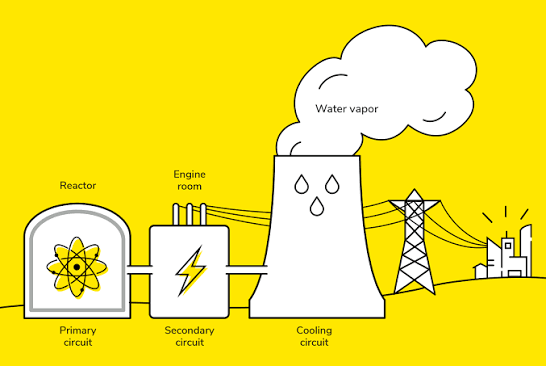
Deployable Energy’s Unity Nuclear Battery is a microreactor, smaller and theoretically faster to deploy than the larger SMR designs from Kairos or X-energy, and it is explicitly targeting the segment of the market that needs power at individual sites rather than utility-scale campuses.
That is a real point of differentiation, but it also means Deployable is competing directly with Oklo’s Aurora and with newer entrants like Aalo Atomics, which is targeting an experimental reactor criticality of its own this July. The microreactor sub-market is arguably more crowded than the large SMR market right now, precisely because the barrier to entry looks lower on paper, even though the regulatory and manufacturing barriers remain enormous in practice.
Where the experts genuinely disagree, and why you should care
I am not going to pretend this is a settled question, because it is not, and the disagreements matter more than the marketing copy suggests.
The first disagreement is about deployment speed. The entire pitch for microreactors and SMRs is that they can be built in three to five years instead of the decade or more required for a traditional large reactor. But several industry analysts think even 2030 is optimistic for first-of-a-kind projects, and that mid-2030s is more realistic for anything resembling broad commercial availability. Deployable is targeting 500 megawatts a year starting in 2030. That is an aggressive schedule for a technology that achieved criticality for the first time only weeks ago.
The second disagreement is about whether nuclear can actually outrun solar, wind, and battery storage in a straight race to meet data center demand this decade. Nuclear proponents argue that intermittent renewables cannot provide the twenty four hour, seven day a week firm power that a GPU cluster needs without absurd amounts of battery overbuild.
Renewable advocates counter that solar and storage costs keep falling every year while nuclear costs keep rising with every regulatory delay, and that betting forty year contracts on unproven reactor designs is a much riskier capital allocation than stacking gigawatts of solar and batteries that are already commercially proven today.
The third disagreement is about public acceptance and safety, and this one is not going away just because the industry wants it to. Building reactors, even small ones, near communities that have no history hosting nuclear infrastructure is going to run into local opposition, permitting fights, and the kind of political friction that has slowed nuclear projects in the United States for fifty years. A microreactor that fits on a truck is still a nuclear reactor, and “factory-made” does not mean “friction-free.”
The fourth disagreement is about whether government incentives or pure market demand are actually driving this wave. Deployable’s criticality milestone happened specifically in fulfillment of an accelerated nuclear deployment executive order, and the company went through the Department of Energy’s Reactor Pilot Program. Some analysts think hyperscaler demand alone would have gotten nuclear projects this far. Others think the regulatory tailwind from Washington is doing more of the work than anyone in Silicon Valley wants to admit, which matters a lot if the political winds shift.
The fifth disagreement is about energy independence versus concentration risk. Is it better for a handful of hyperscalers to build a decentralized fleet of on-site microreactors that reduce reliance on the fragile public grid, or does that just recreate the same chokepoint problem in a new form, where a small number of reactor vendors and deal facilitators like GridMarket end up controlling the power supply for the entire AI economy? Decentralization at the site level can still mean concentration at the ownership level.
This directly answers the third and sixth deep questions worth asking here. Regulatory change is not a hypothetical future need, it is the mechanism that already got Deployable to criticality in about one hundred and fifty days from project start, which is unheard of in nuclear timelines. And public perception is going to be shaped less by press releases and more by whether the first handful of pilot deployments happen without incident, on schedule, near communities that were told this technology was different from the reactors their grandparents feared.
Who wins, who gets squeezed, and what it does to prices
Let’s talk about the pricing question directly, because it is the one every operator reading this actually cares about.
When a hyperscaler locks in a forty year nuclear contract, it is buying price certainty in a world where natural gas prices, transmission costs, and grid congestion charges are all becoming less predictable.
That certainty has value even if the per-megawatt-hour price of nuclear power ends up higher than the current grid average, because it removes a massive variable from a company’s long-term compute cost model.
Over time, as more of these contracts get signed, expect the regions where hyperscalers site their reactors to see local industrial power prices diverge sharply from regions without that kind of capital showing up. Communities near these projects could see cheaper, more reliable power as a byproduct of hyperscaler investment. Communities without it get left further behind on the grid modernization curve, because the capital that used to go toward general grid reliability increasingly gets earmarked for point-to-point deals between one buyer and one reactor.
That is the fourth deep question, on regional pricing structure, and it has a clear answer: this is not going to be an even benefit. It is going to concentrate cheap, reliable power in specific geographies chosen by GridMarket’s existing customer funnel and Deployable’s siting decisions, the same way data center buildout itself has concentrated in Virginia, Texas, and a handful of other states with favorable land, water, and grid access.
On the labor question, the fifth deep question, the honest answer is that nuclear construction and operations require a completely different labor pool than the electricians and HVAC technicians currently staffing data center buildouts. Nuclear licensing, reactor operations, and specialized manufacturing for factory-built microreactors demand a workforce the United States has been under-investing in since the last nuclear construction wave decades ago.
If this pipeline actually executes at scale, it creates real upward pressure on wages for nuclear engineers and licensed operators, and it creates a new category of infrastructure jobs tied directly to AI demand, which is a strange and underappreciated second-order effect of the compute race.
The power question, the seventh deep question, is where this gets genuinely interesting from a Full-Stack Capitalist lens. The companies that stand to gain the most structural power here are not the hyperscalers, who are simply buying an input they need, and it is not even the reactor developers, who are taking on enormous execution risk for a promised payout years away. It is platforms like GridMarket, sitting in the middle with existing customer relationships on one side and a portfolio of interchangeable reactor vendors on the other. That middle position is the least risky and most durable place to sit in this entire value chain, and it is exactly the kind of chokepoint this publication has been arguing is the real prize in the AI infrastructure buildout, more valuable long term than owning any single layer of the physical stack.
The people who get squeezed are the traditional utilities, who now have to compete for hyperscaler dollars against direct-to-developer deals that bypass the regulated utility model entirely, and smaller data center operators who lack the balance sheet to sign forty year nuclear contracts and will be stuck buying grid power at whatever price is left over once the hyperscalers have locked in their firm capacity.
Data centers as political actors, not just customers
The eighth deep question asks what role data centers might play in advocating for nuclear policy, and the honest answer is that they already are political actors in this space, whether they say so publicly or not. When a company signs a sixteen billion dollar deal to restart Three Mile Island, or commits to eight reactor plants with TerraPower, it has every incentive to lobby for faster NRC licensing timelines, favorable siting rules, and continued executive branch support for accelerated nuclear deployment. The interests of Big Tech and the interests of the nuclear industry, an industry that has spent fifty years trying and failing to get meaningful new construction off the ground in the United States, are now more aligned than at any point in American history. That alignment is going to show up in lobbying spend, in state-level permitting reform pushes, and in federal policy long before it shows up as electricity flowing to a data center.
Resilience, and what happens if this actually works
The ninth deep question, about infrastructure resilience, cuts both ways. On one hand, on-site nuclear generation reduces a data center’s exposure to grid outages, transmission bottlenecks, and regional demand spikes, which is a genuine resilience win. On the other hand, it introduces new single points of failure. A microreactor going offline for maintenance, a licensing dispute freezing a pilot deployment, or a safety incident anywhere in the industry could trigger regulatory pauses that ripple across every hyperscaler’s nuclear pipeline simultaneously, the same way a single chip fabrication problem can ripple across the entire AI hardware supply chain. Concentrating power generation and power demand in the same handful of technologies creates efficiency, but it also creates correlated risk.
And that brings us to the tenth question, the one about what happens globally if this pipeline actually delivers. If GridMarket, Deployable, Oklo, Kairos, X-energy, and TerraPower collectively prove that factory-built nuclear can go from criticality to commercial deployment inside a five to seven year window, the implications go well beyond American data centers. Every country racing to build sovereign AI compute capacity, and there are a lot of them right now, will look at this playbook and try to replicate it, because energy access, not chip access, will be the actual constraint on national AI ambitions by the early 2030s. Countries that can permit and build nuclear fast will have an AI infrastructure advantage that has nothing to do with how many GPUs they can import. Countries that cannot will find themselves renting compute from someone else’s grid, which is its own form of dependency.
What this means if you actually build or invest in this stuff
If you are a founder or operator building anything that depends on compute access, the takeaway is not that you need to go sign a nuclear deal tomorrow. It is that power availability has quietly become a due diligence question you should be asking any cloud or colocation partner you depend on, the same way you would ask about their chip supply relationships. Whoever you rent compute from is making decisions right now about their power stack that will determine your costs and your capacity access five years from now.
If you are an investor, the interesting opportunity is not necessarily in the reactor developers themselves, who carry enormous execution and regulatory risk on unproven first-of-a-kind technology. It is in the demand aggregation layer, the GridMarkets of the world, and in the specialized labor, manufacturing, and services businesses that will need to scale alongside a nuclear construction wave the United States has not seen in half a century.
If you are in government, the lesson from this deal is blunt. The executive order that helped get Deployable to criticality in one hundred and fifty days did more to move this industry forward than decades of subsidy programs managed to do through normal channels. Whichever country, state, or municipality figures out how to permit nuclear fast without cutting corners on safety is going to become the default site for the next wave of AI infrastructure investment, and that is a competitiveness lever most policymakers have not fully internalized yet.
The binding constraint keeps moving, but it never disappears
Six months ago the binding constraint conversation in AI was about chip supply. A year before that it was about model quality. Right now, in the middle of 2026, the binding constraint is standing in a field in Idaho, waiting for a truck-sized reactor to reach commercial licensing. GridMarket and Deployable Energy did not just announce a nuclear deal. They announced who they think is going to own the next chokepoint in the AI economy, and it is not the company that builds the reactor. It is the company that decides who gets access to it first.