
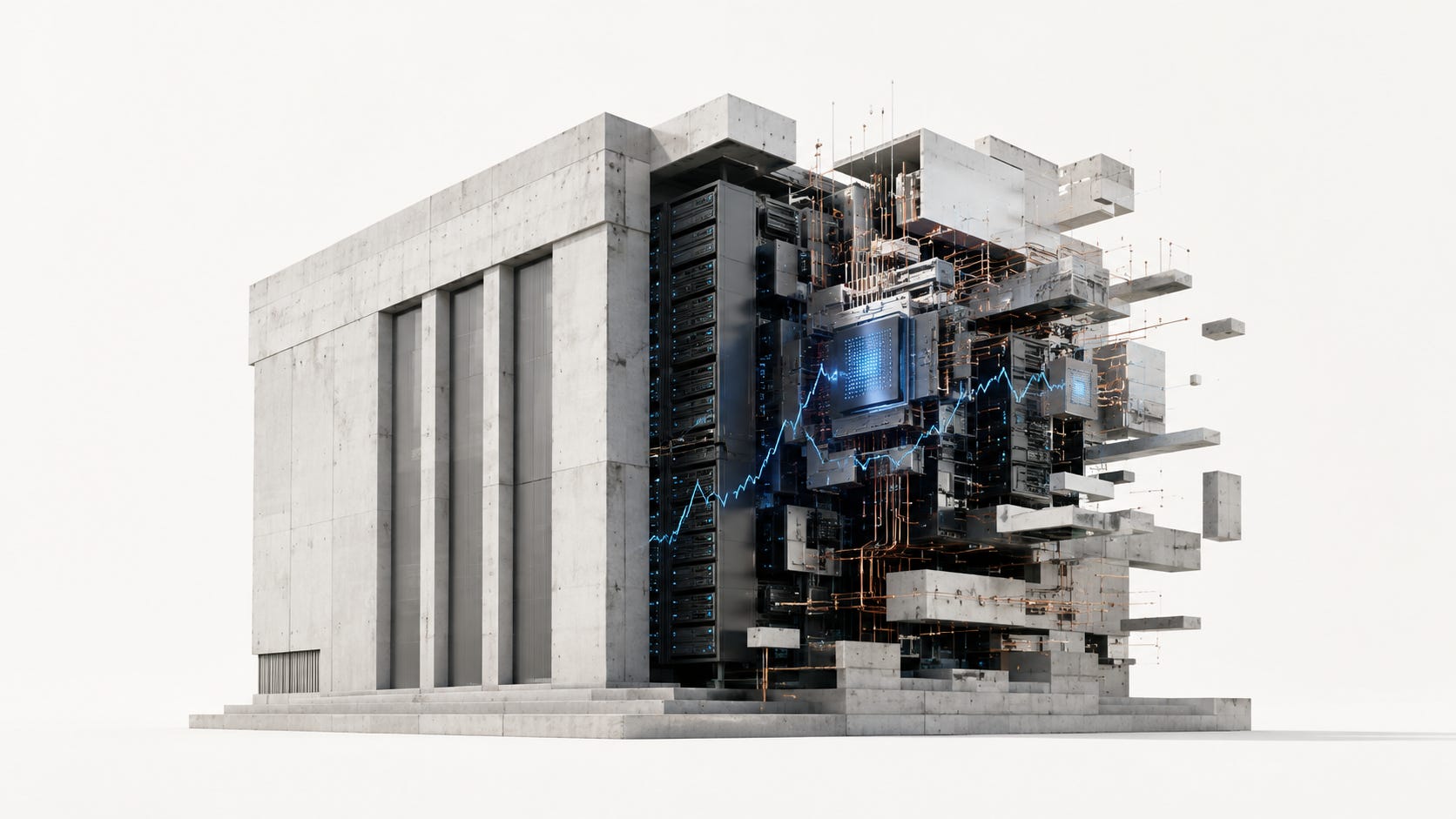
I have designed data centres.
I have built racks.
I have managed data centre operations.
I have worked inside this world at Huawei and Cisco.
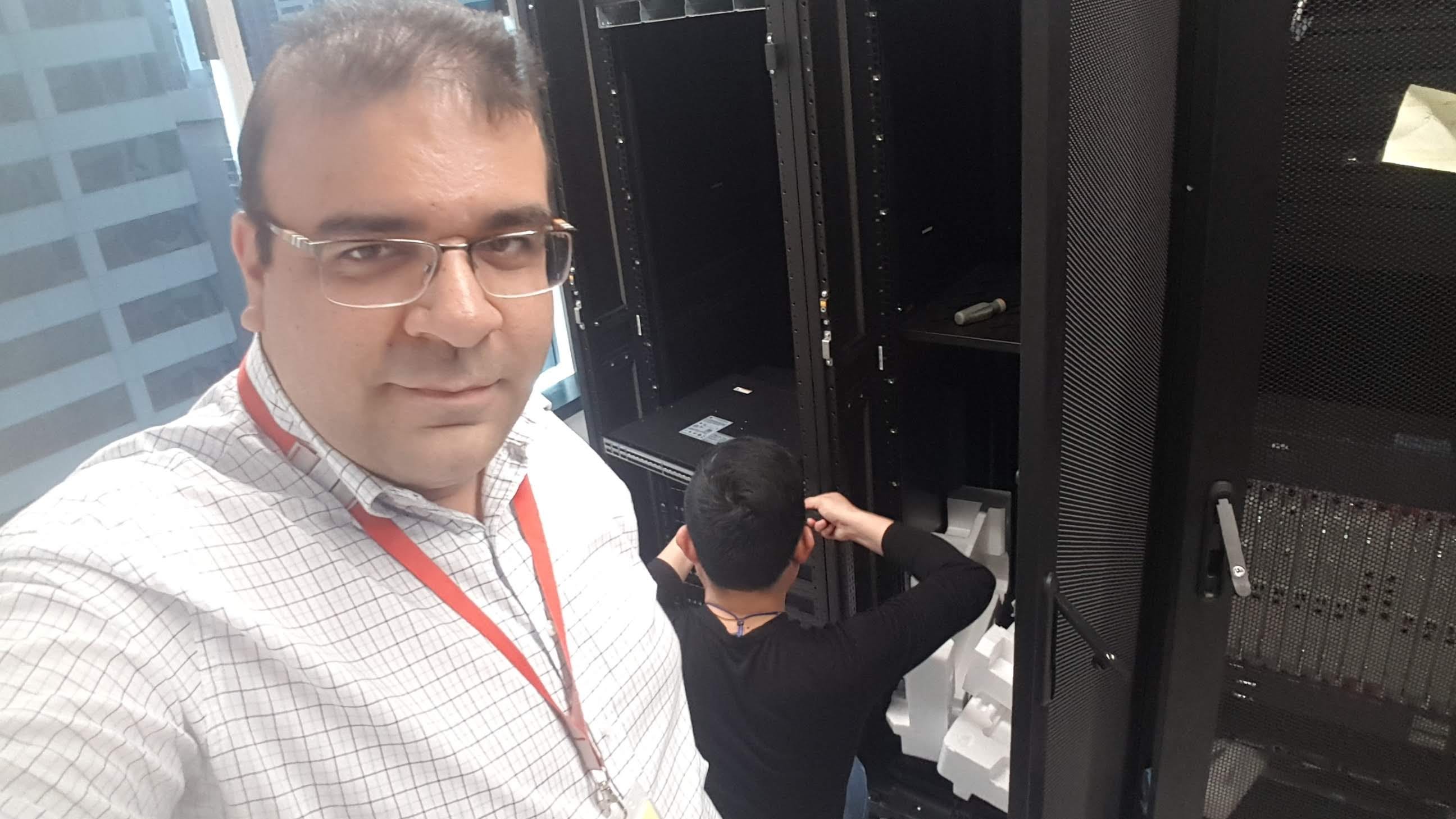
So when I hear people describe AI data centres as safe, predictable infrastructure, I get slightly nervous.
Because I know what is inside the building.
From the outside, a data centre looks reassuring.
Concrete.
Steel.
Cooling systems.
Backup generators.
Security gates.
Very serious people carrying access cards.
It looks like infrastructure.
It looks permanent.
But open the door and walk between the racks.
The building may last thirty years.
Almost everything producing its economic value may not.
That distinction matters.
A lot.
I have seen the physical reality
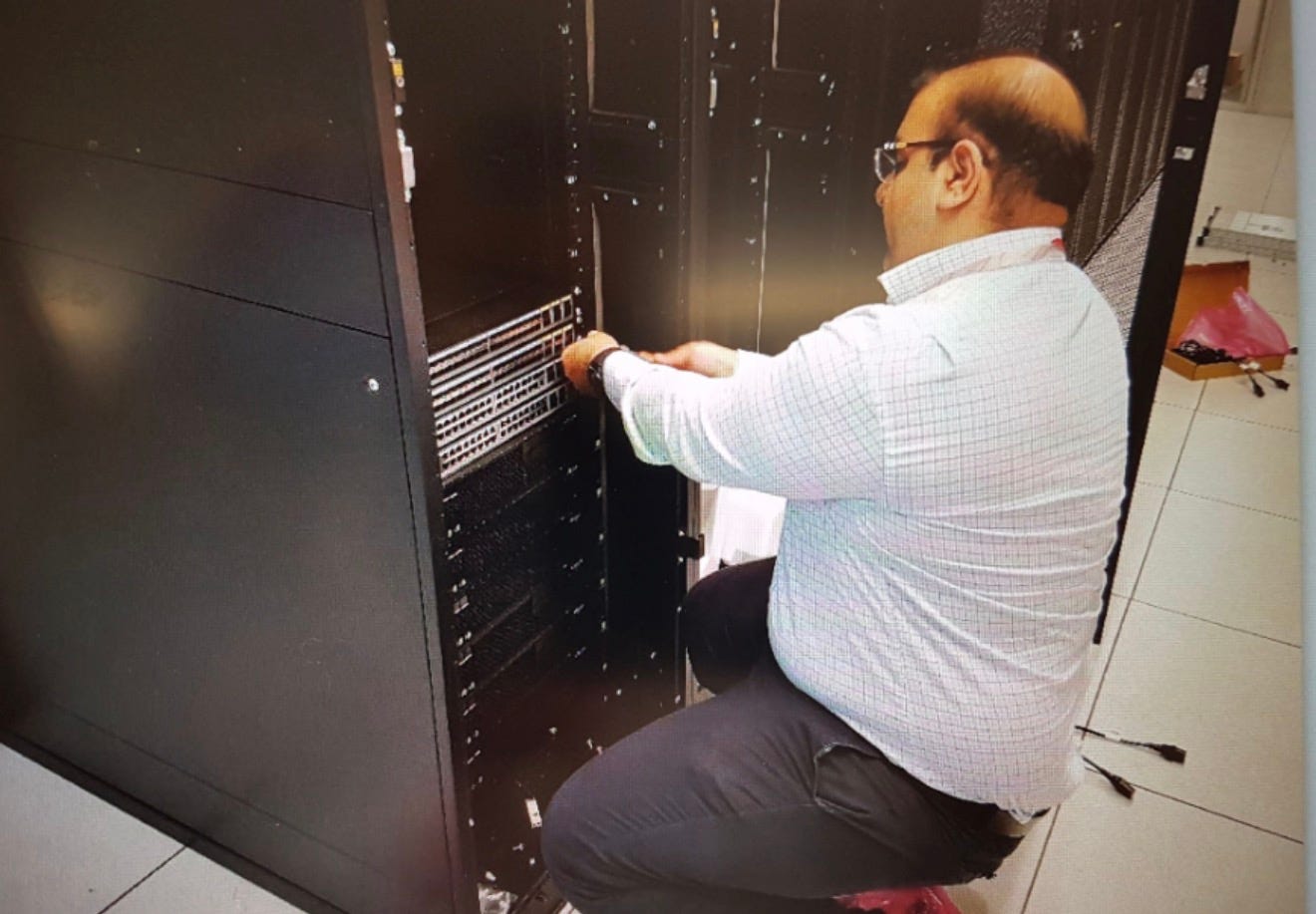
When you build a rack yourself, technology stops being an abstract thing.
Every server has weight.
Every cable needs somewhere to go.
Every device produces heat.
Every system needs power.
Every component has a failure rate.
Every design decision creates another operational dependency.
You learn quickly that there is no cloud.
There are only machines inside buildings.
There are people installing them.
There are people maintaining them.
And there are people panicking when something starts flashing red at 2 a.m.
At Huawei, I saw the infrastructure side.
The physical equipment.
The capacity planning.
The operational discipline required to keep technology running.
At Cisco, I saw the other side.
Networks.
Platforms.
Enterprise systems.
Technology transitions.
Customers trying to modernise without breaking the systems already running their businesses.
Those experiences taught me something simple.
Infrastructure is not valuable because it exists.
It is valuable because someone can use it economically.
A rack with the wrong equipment is just an expensive metal cabinet.
A data centre in the wrong location is a warehouse with a spectacular electricity bill.
And a facility designed around yesterday’s computing architecture can become obsolete long before the concrete begins to crack.
That was already true before AI.
AI has made it much more dangerous.
The old data centre deal

The traditional data centre investment story was fairly simple.
Build the facility.
Connect it to power and fibre.
Lease the capacity to reliable customers.
Sign long contracts.
Collect predictable revenue.
Increase the value of the asset.
It behaved a little like commercial property.
In some cases, it behaved like a bond.
Investors liked that.
Pension funds liked it.
Infrastructure funds loved it.
The returns were not supposed to be spectacular.
They were supposed to be dependable.
AI has changed the deal.
An AI data centre is not just a building with tenants.
It is a giant financial bet on chips, power, cooling, software, customer demand and the future architecture of computing.
All at the same time.
That does not behave like a bond.
It behaves like a technology stock with a concrete shell around it.
The building is slow. The technology is fast.
This is the central problem.
Infrastructure moves slowly.
Technology moves quickly.
A large data centre can take years to plan, finance, approve, connect and build.
During those same years, the chips it was designed to host can change several times.
Power density changes.
Cooling requirements change.
Networking changes.
Rack designs change.
The economics of inference change.
The dominant AI models change.
Even the type of computing customers want may change.
You can spend billions constructing an asset based on assumptions that were sensible when the planning application was submitted.
By the time the doors open, those assumptions may already be old.
I have lived through technology refresh cycles.
The equipment always feels permanent when it arrives.
It is new.
It is powerful.
Everyone wants access to it.
Then a few years pass.
A newer generation arrives.
The old equipment still works.
But working is not the same as being economically competitive.
That is the part financial models often miss.
They model the building over twenty or thirty years.
The technology inside it may have an economically useful life of three to five.
Sometimes less.
GPUs are not tenants
A commercial building can lose a tenant and find another tenant.
An AI facility can lose the economic relevance of its entire hardware configuration.
GPUs are expensive.
They also age differently from traditional infrastructure.
A bridge does not become commercially obsolete because a faster bridge was released eighteen months later.
A transmission line does not lose half its usefulness because Nvidia launched a new architecture.
AI hardware can.
The newer chip may process more work.
It may consume less energy per unit of compute.
It may support a different cooling design.
It may make the previous generation less attractive to customers.
The old GPU does not suddenly stop functioning.
Its economics deteriorate.
That creates a strange asset.
Physically operational.
Technically functional.
Commercially ageing at high speed.
That is technology-stock behaviour.
Not bond behaviour.
Power is now part of the product
During my years around data centres, power was always critical.
No power means no operation.
That has not changed.
What has changed is the scale.
AI does not merely consume electricity.
It concentrates enormous electricity demand in specific locations.
That changes everything.
A data centre site without secured power is not really a data centre site.
Grid access becomes part of the asset.
Transmission capacity becomes part of the asset.
Water availability may become part of the asset.
Political permission becomes part of the asset.
This is where investors can fool themselves.
They may believe they are investing in digital infrastructure.
In reality, they are making a combined bet on:
Semiconductor demand
Electricity prices
Grid expansion
Planning approvals
Cooling technology
AI adoption
Hyperscaler spending
Government policy
That is a lot of moving parts for something being sold as a safe infrastructure investment.
The customer concentration problem
Many AI data centres are not supported by thousands of independent customers.
They may depend heavily on one hyperscaler.
Or two.
On paper, this looks safe.
Who would not want Microsoft, Amazon, Google or Meta as a customer?
But customer quality and customer concentration are different things.
A powerful customer is not necessarily a safe customer.
A hyperscaler can negotiate aggressively.
It can delay deployments.
It can change technical specifications.
It can shift workloads to another region.
It can build its own facilities.
It can develop its own chips.
It can decide that it reserved too much capacity during the AI land grab.
The data centre owner carries the fixed asset.
The hyperscaler carries options.
That is not an equal relationship.
When demand is strong, nobody cares.
When demand slows, everyone suddenly discovers who had the negotiating power.
Usually, it was not the infrastructure fund.
The first-order economics
The first-order story is obvious.
AI demand rises.
Companies need more compute.
More compute requires more data centres.
Data centre owners make money.
That is the story in the investor presentation.
It is not wrong.
It is simply incomplete.
The first-order winners are easy to see.
Chipmakers.
Construction companies.
Power equipment manufacturers.
Cooling providers.
Utilities.
Landowners near grid connections.
Data centre operators.
Everyone earns money during the buildout.
But first-order economics tells you what happens when the spending begins.
It does not tell you what happens after the system starts reacting.
That is where things become interesting.
The second-order economics
The second-order effects begin when everyone responds to the same signal.
AI demand is growing.
Capital rushes in.
More facilities are announced.
More land is purchased.
More power is reserved.
More chips are ordered.
Every investor assumes demand will arrive for their facility.
But customers are also becoming more efficient.
Models are getting smaller.
Inference is being optimised.
Companies are building custom chips.
Workloads can shift between regions.
Some AI applications will create huge value.
Many will not survive their pilot stage.
So supply may be built using today’s demand assumptions while demand itself is being transformed by efficiency.
This creates a dangerous possibility.
We could have an electricity shortage and excess data centre capacity at the same time.
That sounds contradictory.
It is not.
The wrong facilities may exist in the wrong places.
They may have the wrong cooling.
The wrong chip density.
The wrong network connections.
Or power that is too expensive to make the workload competitive.
Capacity is not interchangeable.
A megawatt in the wrong location is not the same as a megawatt next to customers, fibre and cheap electricity.
Then financing begins to change.
Lenders become less willing to treat every data centre as a stable infrastructure asset.
They demand higher returns.
Insurance costs rise.
Refinancing becomes harder.
Older facilities receive lower valuations.
Contracts become shorter because customers do not want to commit to yesterday’s architecture.
The cost of capital goes up.
Once that happens, projects that looked profitable at cheap infrastructure financing begin to look much less attractive.
That is the second-order shift.
The risk moves from construction into financing.
The third-order economics
The third-order effects are larger.
They reach beyond data centres.
Governments will realise that AI facilities are competing with households and industry for power.
That turns grid access into a political issue.
A factory creates jobs across a supply chain.
A data centre can consume enormous power with relatively few permanent employees.
Communities will start asking difficult questions.
Who paid for the grid upgrade?
Who receives the economic benefit?
Who carries the environmental cost?
Why are household electricity bills rising while a hyperscaler receives preferential access?
Governments will respond.
They may introduce special grid charges.
They may require data centres to fund transmission.
They may impose local generation requirements.
They may restrict development in power-constrained regions.
They may demand sovereign computing capacity in return for approvals.
They may favour national champions.
At that point, data centre economics becomes industrial policy.
It becomes energy policy.
It becomes national security policy.
And it becomes geopolitical.
Countries with cheap, reliable energy will gain an advantage.
Countries with weak grids will discover that AI ambition cannot be powered by press releases.
Regions may compete for data centres today, then tax or restrict them tomorrow.
That political risk will eventually be priced into the asset.
There is another third-order effect.
Ownership will begin to matter more than capacity.
If a country hosts the building but a foreign company owns the chips, controls the software and decides which workloads receive priority, does that country really own AI infrastructure?
Not necessarily.
It may simply be renting land and electricity to someone else’s intelligence economy.
That is a much bigger question than data centre returns.
It is a question about who captures value from the next industrial system.
Some assets will become stranded
People hear “stranded asset” and think of coal mines or oil infrastructure.
AI may create its own version.
A stranded AI asset may still have power.
It may still have cooling.
It may still contain functioning hardware.
But it may no longer be competitive.
The electricity may be too expensive.
The chips may be too old.
The customer contract may not be renewed.
The network latency may be wrong.
The cooling design may not support newer hardware.
The local government may change the rules.
The facility remains physically present.
The economic value disappears.
I have seen enough technology transitions to know that obsolescence rarely sends a polite calendar invitation.
It arrives while everyone is still depreciating the previous investment.
This does not mean data centres are a bad investment
AI data centres will create enormous wealth.
Some assets will become incredibly valuable.
Facilities with secure power, flexible designs, strong network connectivity and diverse customers may perform extremely well.
But that is exactly the point.
The category is not uniformly safe.
You cannot value every AI data centre as though it were a toll road.
You need to understand what is inside it.
You need to understand its power contract.
You need to understand the hardware cycle.
You need to understand who controls demand.
You need to understand whether the facility can adapt.
You need to understand the customer’s alternatives.
And you need to understand what happens if AI becomes much more efficient.
The winners will not simply own buildings.
They will own adaptable access to power, compute and customers.
The losers will own very expensive boxes built around assumptions that expired before the debt did.
I no longer see a building
When I look at a data centre, I do not just see concrete.
I see racks.
I see cables.
I see cooling.
I see operational dependencies.
I see hardware waiting to become old.
I see power contracts.
I see customers with more bargaining power than landlords.
I see financing models that may be using the wrong definition of risk.
I see all the things that can change while the building stays exactly where it is.
That perspective came from working inside the industry.
From Huawei.
From Cisco.
From designing facilities.
From building racks.
From operating the machinery behind the word “cloud.”
The AI infrastructure boom is real.
The demand is real.
The opportunity is real.
But the safe, bond-like data centre is disappearing.
What is replacing it is more powerful.
More strategic.
More profitable for the winners.
And far more dangerous for anyone who mistakes concrete for certainty.
AI data centres still look like infrastructure.
Economically, they are becoming technology stocks.
The only difference is that when this technology bet goes wrong, you cannot uninstall the building.